

Just an hour’s drive from Chennai along the scenic East Coast Road (ECR), Mahabalipuram (also called Mamallapuram) is one of Tamil Nadu’s most loved weekend getaways. This UNESCO World Heritage town is famous for its 7th and 8th-century rock-cut temples, monolithic sculptures, and golden beaches along the Bay of Bengal. Whether you’re a history enthusiast, a photography lover, or someone simply looking for a relaxing coastal escape, this guide covers the top places to visit in Mahabalipuram – and where to stay once you’re done exploring.
No list of Mahabalipuram sightseeing spots is complete without the iconic Shore Temple. Built during the Pallava dynasty in the 8th century, this UNESCO World Heritage monument stands right on the edge of the Bay of Bengal. Its three shrines – two dedicated to Lord Shiva and one to Lord Vishnu – are carved entirely out of granite and have withstood centuries of sea erosion. Sunrise is the best time to visit, when the golden light hits the ancient stone.
A short walk from the town centre, the Five Rathas are a set of monolithic temples carved to resemble chariots, each named after characters from the Mahabharata – Draupadi, Arjuna, Bhima, Nakula-Sahadeva, and Yudhishtira. This UNESCO-listed site is a masterclass in Dravidian architecture and one of the most photographed historical places in Mahabalipuram.
Considered one of the largest open-air rock reliefs in the world, Arjuna’s Penance depicts scenes from Hindu mythology carved directly into a massive granite rock face. The sheer scale and 7th-century craftsmanship make it a must-see for anyone exploring things to do in Mahabalipuram in a single day.
This giant 250-tonne granite boulder appears to defy gravity, perched on a gentle slope without rolling down. Locally known as Vaanirai Kal (“Stone of the Sky God”), it’s one of the most Instagrammed spots in town and a favourite with families and kids for photo stops.
Located about 5 km from the main town near Saluvankuppam, Tiger Cave is a rock-cut shrine featuring eleven carved tiger heads surrounding a figure of Goddess Durga. Surrounded by casuarina groves, it’s a peaceful spot that’s less crowded than the main monument complex – great for a quiet picnic.
A compact but intricately carved cave temple dedicated to Lord Vishnu’s Varaha (boar) avatar. The detailed sculptures of deities like Durga and Gajalakshmi make this a favourite among art and history lovers exploring places to visit in Mahabalipuram with family.
Operational since 1904, this lighthouse offers panoramic views over the town’s monuments and the Bay of Bengal. Right beside it stands the older, unfinished Pallava-era lighthouse (Olakkannesvara Temple), adding another layer of history to the climb.
An Irular Village experience offers travellers an opportunity to discover the local culture and traditional knowledge of the region.
The Irular community is known for its close relationship with nature and its understanding of the surrounding environment. Depending on the experience available, visitors may learn about traditional lifestyles, regional customs, storytelling, local skills, crafts, and nature-based practices.
This cultural experience adds greater depth to a Mahabalipuram trip by allowing visitors to explore the region beyond temples and monuments. Travellers should select responsibly organised programmes that respect the community’s privacy, traditions, dignity, and livelihood.
Located about 14 km from Mahabalipuram, this conservation centre is home to Indian and African crocodile and alligator species, along with a snake farm. It’s an engaging half-day trip, especially for travellers with kids.
Vedanthangal Bird Sanctuary is a rewarding nearby attraction for nature lovers, families, birdwatchers, and photographers. Recognised as one of India’s oldest bird sanctuaries, it attracts a wide variety of migratory and resident birds during the nesting season.
Visitors may spot pelicans, painted storks, herons, egrets, cormorants, spoonbills, and several other waterbirds around the sanctuary’s lake and nesting trees.
The peaceful natural setting makes Vedanthangal a valuable addition to a longer Mahabalipuram tourism itinerary, especially for travellers who want to combine heritage sightseeing with wildlife and nature. Since bird activity changes depending on the season, visitors should check current conditions before planning their trip.
After a day of temple-hopping and sightseeing, you’ll want a place that lets you unwind in comfort – and this is where Esthell Village Resort stands out as one of the best resorts in Mahabalipuram.
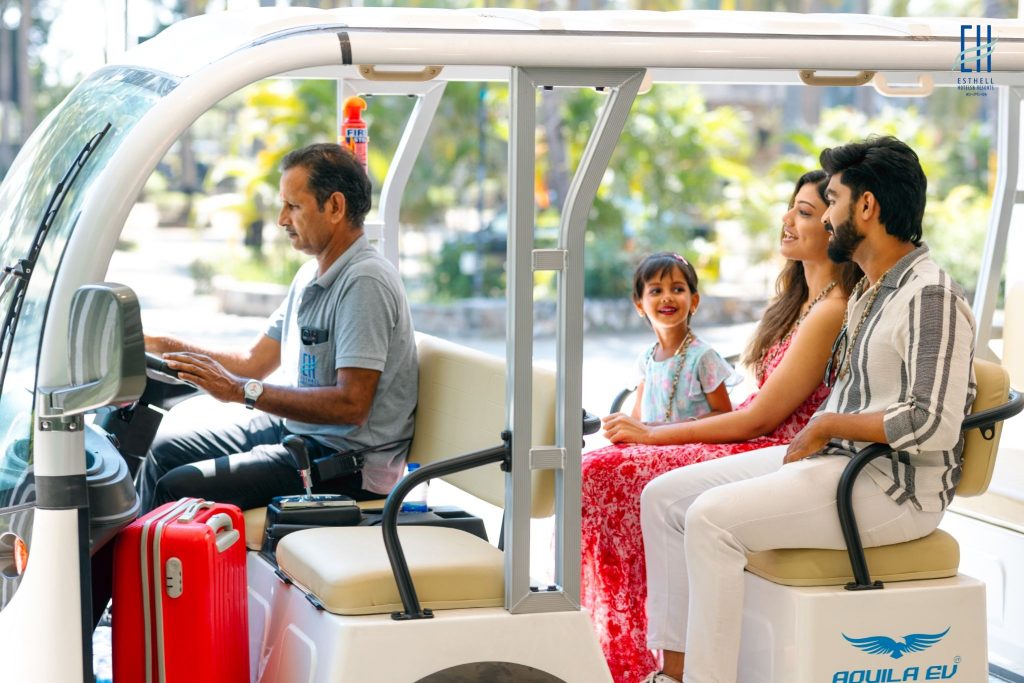
Unlike standard city hotels, Esthell blends luxury with the charm of a countryside retreat. Think bullock cart rides, peaceful nature walks, and lush green surroundings – all designed to help you disconnect from the city and reconnect with nature, making it one of the most unique family resorts in Mahabalipuram.
Esthell Resort is built for families, couples, and groups alike:
This range of activities is exactly why Esthell is regularly rated as the best resort to stay in Mahabalipuram for family outings and team offsites.
With three in-house restaurants – Green Oasis, Masarat, and a dedicated Barbeque zone – Esthell offers a mix of multi-cuisine dining and outdoor grill experiences, so you’re never far from a great meal after a day of sightseeing.
Beyond a leisure stay, Esthell houses five party lawns (with capacities up to 3,000 guests) and five banquet halls, making it a popular pick for destination weddings, corporate events, and large family celebrations near Chennai’s ECR.
Located on Sadras Road in Tirukazhukundram, Esthell Village Resort offers convenient access to all the major Mahabalipuram tourist places listed above, while still feeling like a world away from the city – ideal for a weekend getaway near Chennai.
1. What is the best time to visit Mahabalipuram?
The best time to visit Mahabalipuram is generally from November to February, when the weather is comparatively pleasant for exploring outdoor monuments and beaches. During warmer months, plan your sightseeing in the early morning or late afternoon to avoid the strong midday heat.
2. Can Mahabalipuram be covered in one day?
Yes, the main Mahabalipuram tourist attractions can be covered in one day if you begin early. A typical one-day itinerary can include Shore Temple, Pancha Rathas, Arjuna’s Penance, Krishna’s Butterball, Varaha Cave Temple and Mahabalipuram Lighthouse. Staying overnight gives you more time to explore the attractions without rushing.
3. How many days are enough for a Mahabalipuram trip?
One day is sufficient for the main monuments in Mahabalipuram. However, a two-day trip is more comfortable if you also want to visit Tiger Cave, Crocodile Bank, nearby beaches, cultural experiences or other attractions around Mahabalipuram.
4. What are the must-visit places in Mahabalipuram?
The must-visit places in Mahabalipuram include Shore Temple, Pancha Rathas, Arjuna’s Penance, Krishna’s Butterball, Varaha Cave Temple, Tiger Cave and Mahabalipuram Lighthouse. Travellers planning a longer trip can also include Crocodile Bank and Vedanthangal Bird Sanctuary.
5. Is Mahabalipuram suitable for a family trip?
Yes, Mahabalipuram is suitable for families, couples, children and groups. Its historic monuments, beaches, rock carvings, lighthouse and nearby wildlife attractions offer a mix of educational and leisure experiences. Families should carry drinking water, sun protection and comfortable footwear.
6. What is Mahabalipuram famous for?
Mahabalipuram, also known as Mamallapuram, is famous for its Pallava-period monuments, rock-cut temples, monolithic sculptures and coastal architecture. The Group of Monuments at Mahabalipuram is recognised as a UNESCO World Heritage Site.
7. Where should I stay when visiting Mahabalipuram?
Travellers can choose a resort near Mahabalipuram that provides convenient access to the tourist attractions along with facilities for relaxation. Esthell Village Resort offers rooms, restaurants, indoor and outdoor activities, a swimming pool, spa facilities, kids’ activities and event spaces, making it suitable for families, couples and groups.